Ep 15: Financial Readiness - What it Really Means for M&A Success
I always did like business, and I had two older brothers who were also majoring in accounting. But all three of us ended up going into different areas. One of them is more of a traditional small business tax accountant. One went into the FBI. Oh.
Janice:And then I went into more of the advisory phase after I left my first stint in public accounting. So I just feel like it's a great way to help businesses and to really understand what makes them tick.
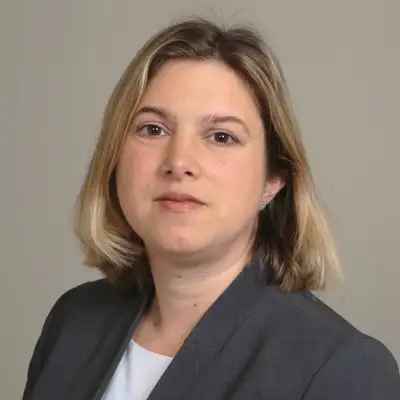
Deborah:Well, thank you for sharing that. For those of you just joining us on Touchstone Talks, this is Janice O'Reilly from AAFCPAs. She is currently a partner and soon to be at Council. We're glad to have her. She's gonna talk to us a little bit as we hit our beginning of the year where everybody's looking at our financials going how'd last year go about what need to know in terms of financials.
Deborah:So many of our founders are really, really good at making the coffee bean, and producing the aerospace parts, and organizing the welding line, and but financials are are sometimes a struggle. So that's that's kinda the premise of today's today's discussion. AFACPAs is a large firm in terms of its
Janice:offering. 400 people, but our offerings are vast. Yes.
Deborah:Yeah. So give can you give us, like, a just a rundown on when when somebody would think of a f I I messed your name.
Janice:AAFCPAs. I know. As you know, in this business, we talk about we use acronyms a lot. So the I just add AAF CPAs to the list of acronyms. So when we we have traditional departments like any CPA firm would have.
Janice:We have got tax. We've got, audit. We've got outsourced accounting. We have employee benefits. We have business and IT consulting.
Janice:But what makes us particularly unique is our focus on advisory. And so I currently run what we call the transaction advisory services program. And within that niche, we'll call it, we bring in experts from all of the different areas as needed. So someone would call us. Hopefully, it could come in from, we also have a wealth management group.
Janice:It could come in from wealth management. It could come in from tax. It could come in just from our network, and we hope it's early. We hope they're saying to us, we really need, to think about our financials. We're thinking about either, you know, selling in the short run, or we even sometimes have people that are giving us offers.
Janice:So they wanna know a little bit about their financial statements. So I can jump in and tell you a little bit about how that works.
Deborah:Great. So so that's that jumps into where so transaction services, you're focused on internal, external, east do you do ESOP work?
Janice:We do do some ESOP work. Yeah. Okay. We do. Yeah.
Janice:So that's In our in our tax department.
Deborah:That's pretty much all the the only ways to exit. Right? Like Yeah. You're so so that's great that you're involved in all of them. We all hope that they come in early.
Deborah:Right? Like, because that's that's ideal. So how early do you guys like to see them?
Janice:Well, I mean, we like to see them a few years in advance if we can. But, honestly, I would say maybe 5% of them ever really, think that far ahead. And we ask, of course, we ask what your exit strategy is. But to your earlier point, Deborah, everybody's thinking about nose to the grindstone. How do I run my business?
Janice:How do I grow my business? How do I reduce any risk in my business? They're all thinking about their own businesses. But I think that's exactly why you need someone that focuses on transactions. We don't know your business.
Janice:I have full respect for what people have been able to grow, people have been able to do. And I think we come in with that respect, which I think number one is super important. And then we try to have a discussion about their financial statements. And as I'm sure you see as well, with most of the companies we deal with, there's they're, I would say privately held, closely held, and, they usually do their financial statements just for tax purposes. Maybe they have to do something for the bank, maybe, where they're putting them onto, maybe they're getting a review, possibly an audit.
Janice:But what gets confusing for people who don't operate in this space is all the terminology that we use. So if, for example, I could say, are your financial statements on GAAP? And they don't know what I mean. Right?
Deborah:And they say yes.
Janice:And they say yes because they equate it with either tax accounting or accrual accounting or something. But that's really where there's a lot of miscommunication with a potential buyer. Because as you and I know, GAP stands for generally accepted accounting principles, and there's a lot of principles beyond just accrual accounting. Right? So we typically ask, okay.
Janice:Well, if you are on GAP, you have audited financials. Do you have and I'm I'm gonna give you a typical example, and the answer is no. They have, financial statements that perhaps are on accrual. They don't know some of the GAAP terminology. We'll throw out things like about revenue recognition or warranty reserves or anything like that, and that's not really where they're at.
Deborah:No.
Janice:And that and they haven't had to be. And it's very expensive Mhmm. To get your books onto US GAAP or, you know, any IFRS, any other type of GAAP. If a buyer requires that, our firm can certainly jump in and do that. We have, teams that can come in and audit you or review you and put you on help you to get on US GAAP, or IFRS, but typically, it's US GAAP.
Deborah:And we try to make it so that it's as historically prepared, so that on GAAP is not mission critical. Once you say on gap, revenue recognition can change. Significant. And that can make a big difference in the bottom line. Absolutely.
Deborah:Yeah. Although, one very pleasant story that had the revenue recognition was being delayed, and when they actually went through and put it on GAP, the company was doing much better from an EBITDA perspective, but that's not the direction we That's one story that I can have. In a lot of years, most of the time, it goes the opposite way.
Janice:Exactly. And when you even just mentioned something like EBITDA, that's an acronym a lot of companies don't quite understand. And, I mean, it's technically earnings before interest, taxes, depreciation, and amortization. Well, what does that mean? And and buyers are typically trying to figure out what it's actually gonna cost to run your business.
Janice:So, interest usually relates to some sort of a debt instrument that may or may not be carried forward. Taxes could be under a completely different scenario, and then depreciation and amortization. You know, they're not cash items, but you would have had to have outlaid cash to get the assets associated with it. But these are all just sort of data points that a buyer would be looking at on your financial statements.
Deborah:Agreed. Agreed. And even when we do EBITDA for going forward consideration, we adjust out add backs and, you know, fun things for us to fight about later in the transaction. But that's important, right? That's why you bring somebody in that knows what they're doing with the financial statement.
Janice:It is. And it doesn't mean that every company ends up having to be on GAAP. A more typical scenario for us is where we go in and we try to identify what basis of accounting they are on. And we can do what we call a q quality of earnings light or QEV light, which basically goes in and looks at how are you recording revenue? How are you recording, your cost of goods sold?
Janice:How are you recording any compensation and deferred compensation to people? How are you doing it? And then we document that. And in in our report, we'll show what that is. And the the reason that these financial statements are very important and to understand what basis you're on is most of the time, and I would have to say all of the time, but I'm sure there are exceptions, where a buyer is gonna come in and offer you something based on a multiple of something on your financial statements.
Janice:So they could say it's three times revenue or six times your EBITDA. Well, as you had said earlier, that revenue number is very different if you're looking at it under accrual basis, if you're looking at it under cash, if you're looking at it under GAAP. So therefore, your EBITDA numbers are gonna be different. So you really need to understand what the buyer's basing that on. Are there are there some things you can do to improve that, not improve that?
Janice:And if you get started early enough, even if you think you have to be on gap, there are certain things you can do for revenue. So as an example, under certain scenarios, you have to defer your revenue longer even than the contract if you've put items in there that have any kind of future benefit, like future discounts or anything like that, and that impacts your revenue under GAAP. So we like to really understand what the financial statements are, present those to the buyer, so then the buyer can use those as a multiple. And at the end of the day, we're just trying to, avoid anybody being surprised, the seller, the buyer.
Deborah:Right. Nobody likes surprise when it comes to financials. Yeah. It's just even if the surprise is, Hey, your actual GAAP revenue is higher, it impacts your buyer because they may no longer be able to afford your business.
Janice:That's a really good point. And oftentimes, if you get a letter of intent and it's based on a number, you may not find out that your revenue number is better until later on. And I don't know about you, Deborah, but I've never seen a price increase after an LOI.
Deborah:I always same see buyer. Not with the same buyer.
Janice:Same buyer. Exactly. Not with the same buyer. So we like to make sure we know what we're looking at. And some of the key areas that jump out on financial statements from a buyer's perspective that you should be thinking about, we've talked a lot about revenue, and that's really a a big one.
Janice:How are you recording it, and what are you doing? And then the related cost cost of goods sold to get you to a margin. Some companies don't allocate any, people, for example, to their cost of goods sold, but the buyer might when they're doing their analysis. So you really need to say what it is you're doing and how you're reporting it. Yep.
Janice:There could be bonuses that you're accruing. We see that as an adjustment a lot. Mhmm. We see vacation. If if you have an a policy where you people can accrue vacation, but you're not accruing it on your financials, that could be a hit.
Deborah:Yeah. And that's one that always seems to come up at the last I don't know why consistently nobody looks at that until we're ready to sign documents, and then they're like, wait, we haven't been accruing for vacations.
Janice:I know. It's when the buyer starts to say, okay. What is this gonna look like as soon as I bring all these payroll people on board? And depending upon how you've structured the deal, sometimes they make you pay that out before you join. Sometimes they'll accept the accrual, but they'll reduce it from the purchase price.
Janice:Yeah. All kinds of things that can happen there. The other area that we see a lot is state and local tax issues coming up, and we've got a a full that's the acronym for that is SALT. And we see a lot of that coming up or buyers wanting to set up an escrow for that. Right.
Janice:Because the laws are crazy. People still have this perception that if I'm performing a service, as an example, it's not subject to sales tax. Well, that's not true in every state. It's state, yeah, has different rules, different floors that you have to exceed in order for you to be subject to that, but it's very, very complicated. So I was working with an international company at one point and I was starting to explain some of the state and local tax issues.
Janice:And he said to me, asked me, well, isn't there just a website I could go to and find out? And I said, no. I wish.
Deborah:But I don't. It'd be a lot easier.
Janice:It would be. Yeah. So we quickly are doing that.
Deborah:Yeah. The first time we needed a salt analysis, we said the same thing, because we were like, well, can't we just go check to even see if we need this? Isn't there a place for that? There is not.
Janice:There isn't. And so luckily, we have experts. It is one of the things that comes up in almost every transaction. And we wanna avoid the buyer, requesting an escrow for that. Right.
Janice:So I think that's a pretty interesting, concept to think about.
Deborah:Yeah. Absolutely.
Janice:And then other areas, maybe ones in, you know, definitely liabilities people are looking at that, significantly. And that can also I mentioned earlier about, like, a warranty reserve or so if you're doing something, for customers or clients that they could come back to you for, are you reserving for that? And Right. Typically, buyers are gonna want you to try to estimate what that could be, so we sort of do a waterfall of that. So it's really just thinking about things in ways other than what you would do for your tax return prep.
Deborah:Yep. And it truly is. And, you know, networking capital is something that comes up consistently across every part of a transaction, LOI and on. It's not the number of times I've tried to sit down and explain networking capital to an owner, but it's not something they ever have to think about in their day to day. It is something that only matters if you're cutting the company off at a certain day, which happens, hopefully, once in an owner's lifetime.
Deborah:Right? That component is an important financial attribute, and that goes a lot towards the balance sheet. I'm not even certain that that's something that most owners look at very often.
Janice:They don't. And they're not looking at it really. Most of the agreements we work with require you to have what they call a target networking capital. And then if you go over or under that by the time the deal closes, your purchase price is gonna be adjusted up or down. Now they might have a little bit of leg room in there where it it wouldn't impact it.
Janice:But for the most part, that's the theory.
Deborah:We try for 10%.
Janice:A 10% collar is reasonable just so you're not, you know, talking about $99 or something either way, it would cost you more to prove it one way or the other. But what happens and and I think it's important for, people to understand why that's in there. And many times, a deal would be a noncash, nondebt deal, meaning the seller gets to keep the cash, but they have to pay off all the debt. So if you do not have some sort of networking, target, capital target, people will think, well, gee, I'm just not gonna
Deborah:Pay my
Janice:bills. Or I'm gonna accelerate all my receivables, and therefore, I'll have more cash.
Deborah:Right.
Janice:Well, people have thought about that, and that's why they say, let's say and let's let's talk a little bit about the definition of networking capital, which is typically used in these agreements. Is it's if you don't look at an agreement, it's usually current assets minus current liabilities. In agreements, it's almost exclusively doesn't include cash. So it would be any other current assets minus current liabilities. And whatever that number is is what the target is.
Janice:They usually look at maybe a trailing twelve months or something like that to get your target. But it's really important to work with people who understand your financials because there are things in there that maybe should be out of there. I'll give you some examples, like seeing how you're recording your revenue. Deferred revenue is oftentimes included in your, current liabilities, but it's also typically included in what you're showing for debt or another calculation in the agreement. So you want to make sure that you're not getting hit for things like that twice.
Janice:Yeah. So you really need to understand what's in the balance sheet. There could also be things in the accrued expenses that they're picking up elsewhere, like, taxes or something like that. So you really need to understand the components of it, and that's one of the things we really work hard on negotiating what exactly is in the definition. Yes.
Janice:Because you can define it however you want in these agreements, current assets and current liabilities.
Deborah:Yeah. Absolutely. We have, you know, we and we use it to help the clients as much as possible if we have a client that doesn't track inventory or something, you know, that's clearly not GAAP, but is the way they've operated, You know, our goal is not to change the way they're operating, but to fairly account for things.
Janice:Yes. Inventory is a good one, because if they are accounting for it, fine. But they're typically not doing a physical count on a regular basis. It's just sort of whatever ends up in their accounting system when they put things in and take things out.
Deborah:They threw the dart.
Janice:It landed on the board. Yeah. Just sort of ended up that way. When they receive something, they put it in. When they sell it, they take it out.
Janice:But, a buyer is going to come in because if they're doing if they're buying the inventory, they want to see what that inventory number really is and how are you costing it out. And I just had a situation recently where when they did do the physical inventory, it came out higher. And so that was gonna result in a really big working capital adjustment because when we looked at the trailing twelve months, the target that they used, it wasn't in there. Now you do the final for the close, it's in there, and it resulted in additional, money supposedly being paid to the seller, but the buyer's saying, look. We're not getting anything more.
Janice:It's still the same inventory. You've just changed the value. So there goes the negotiation. Right?
Deborah:And Absolutely.
Janice:For business owners, unless they're, you know, experts in this, they really need people like you and me and our firms to help them flush through some of those issues.
Deborah:Absolutely. We had a case where the the buyer inside the company who was buying their inventory didn't know that there was a transaction taking place. Right? Because they're
Janice:Good point.
Deborah:Right? So they're operating ordinary course of business. They saw tariffs on the horizon, and they bought a whole bunch of inventory to get it on-site before the tariff. Yeah. And and our seller was really busy with the transaction, really busy running the day to day, and didn't, you know, didn't have that conversation to see what was happening.
Deborah:And so, when we did the inventory, and it wasn't a small dollar amount, it was a very it had six numbers in it.
Janice:Oh boy, yeah.
Deborah:So it it was a problem, and we had to go back and say, well, this is inventory you will use, so maybe we rewrite we rewrote the true up to kinda we're like, this is to everybody's benefit, so
Janice:Good point.
Deborah:This, you know, let's work through how to make it equitable.
Janice:Make it fair. Yep. Yeah. But the point is too, the other point is that oftentimes, most of the employees do not know this is happening because the owners don't wanna share that information until it actually goes through. So I had something, similar where, someone in the IT department entered into a contract for something that was pretty significant, and they had full right to do it.
Janice:But it ended up causing some, some issues with debt because the buyer was trying to say, well, this is a contract that we weren't anticipating, and now you have to pay we've deducted Pay it out. Of that out of the proceeds. So, again, lots of negotiation, and using people like us who have gone through so many deals, hopefully, will help you Absolutely. Not only go through this.
Deborah:That is absolutely the goal, support the people that we're working with. So do you guys do it sounds like you do more sell side transaction support. Do you do buy side as well?
Janice:We do do buy side as well. Sure. We have expertise on both sides. I think that, from a buy side, the most of the companies we work with have people internally that can handle the financial statements. Mhmm.
Janice:What we then do is add any expertise in the transaction side, in the due diligence side, in the tax structure side, but it's not usually as much in the financial statement piece. If they do want us to do a quality of earnings light on the target, we certainly can do that, but we're usually just augmenting the existing buy side team.
Deborah:Okay. So I know we have several search funders that listen in on a regular basis. Is that somebody that would be a good person to give you a call? Right? Those are the smaller buy sides, not fact necessarily by a full PE.
Deborah:Is that the kind of buy side support that you guys think?
Janice:That is perfect for us because that is where they need our expertise. Mhmm. And we do find, anybody that hasn't done this a lot, we do find some new entrepreneurs that, are eager to go out. My background is in entrepreneurship, and I'm also an angel investor and on the board of Mass Ventures, which funds startups. And so it's just that's really where a lot of our passion is.
Janice:So if you can, we can help you look at the target, evaluate the target, do due diligence on the target, and we can help the buyer with structure. We work very closely with the lawyers. How should this deal be structured best from a tax perspective? What should the new entity look like? So we can absolutely help on on that size transaction.
Deborah:That's great. And that is, I think, an underserved population in our ecosystem.
Janice:I think you're right, and I think part of it, and this may or may not be true, is that until people start going through these deals, they don't really know how complicated they are. And and we've seen so much in in our years of doing this that, hopefully, we can help avoid some of some of the pitfalls.
Deborah:Absolutely. That's great. So, generally,
Janice:at
Deborah:the end of every episode, I ask the same question, and I'm gonna ask you to kind of teleport back to your days of youth, and if you were not a CPA, what other job would you have gone into?
Janice:So that's a very easy one. For me, it would be an oceanographer or marine biologist, something to do with the ocean. So for those who don't know, I actually live on Cape Cod, and I can look out my window right now and see the ocean, and that's absolutely something to do with the ocean or the beach, a 100%.
Deborah:That's great. That's great. Well, thank you very much for joining us. If you guys that are listening have not joined previously, please like, subscribe, and follow. Touchstone Talks is available on all major podcast items, Apple, Spotify, probably some I don't even know.
Janice:And
Deborah:if if Janice has kind of made you think about reaching out, her information is also located on all of those sites. So I'm sure she will be happy to help find the right part within within AFACPA.
Janice:Happy to talk. Yep. Thank you so much, Deborah. It's been a pleasure. Thank you.
Creators and Guests