Ep 18: The Buyer's Perspective on Acquiring a Family Business
Food for the sausage processors and stuff.
Okay. You think he's back filling Robert?
Ultimately. Cool.
Yeah. Good. How's Robert doing?
Better. Okay.
Sort of a, stressed out God,
that's so funny.
Yeah,
I guess I could see stressed out, right?
He's got that militant precision
component to God.
He likes it very much, you know?
So he's large.
I mean, he was much worse over here
internally.
Probably wouldn't
be able to work on business.
Oh, yeah.
I just can't,
you know, criticize in private
and praise him.
Right? Right.
That's the golden rule.
Golden rule for any business. Right.
So that would pay for that.
That's where the focus either
will let me deal with it.
All right. That's why I'm here.
Yeah. Yeah. Exactly.
I spoke to Pat yesterday.
Is he good?
Yeah, he's doing good. He's
learning the new chapter.
He's got Charlie's teach. My son. He's 75.
He has got
some heart issues in the hospital.
Oh, yeah? Yeah.
And, so he came to my office Monday
teary eyed
and, told me the the news,
and he spoke to Vegas
in March and his doctor said,
I hope you're doing so.
He's working on stuff on his body
and, you know,
makes you think how life is so short.
So you got to be able to balance. Yeah.
Able to work.
And if you wait till retirement
and that chapter doesn't work at a cousin
who had a your accident a few months ago.
Sorry.
And, he's 73,
so, you know, you never know.
You never know.
What do we want to do today?
No guarantees for tomorrow.
That's unfortunately true.
Unfortunately true.
My father in law takes you to that.
You had a good run.
Because if you want to go on three wives.
Before you can
travel to 40 or 40 countries.
Might be the better marker there, sir.
for those of you guys
just joining Touchstone Talks,
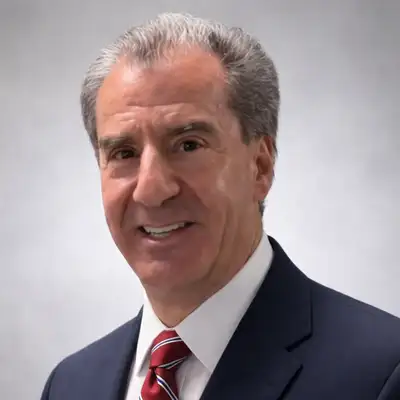
we're here with John Santa, coach,
who is owner operator from Wineries
Meats, a business that,
I worked to sell to him,
a few years ago now,
which I can't imagine this time of flies.
But, we're
going to pick his brains about,
what it's like to buy a business
to step in and operate a business,
because I know there's a certain amount
of our listeners that are,
are looking for a buy side business,
just like he was.
So thank you for.
Thank you.
Yeah. Podcast.
Looking forward to the,
the learning experience.
It's the same kind of conversations
you and I've been having for years.
So what?
Let's start at the beginning,
because this wasn't
the first company you've operated.
So what made you make the jump
for operating for somebody else
to buying your on your own?
Great question.
I always believe
I can control the destiny better
if I'm writing and making decisions
and being in charge.
And I think from a young age,
I always expected that I would go
into my own business and call the shots
and, you know, wake up in the morning
and say, you know, successful day
was in the mornings
that I got some things to learn.
And, and that's really it.
But maybe go out and look for businesses.
Okay.
So when you, when you made the choice
to go start, what was it like?
What was that process?
What you went, okay,
I think I want to do this.
How did you educate yourself?
How did you proceed down
this route of criteria of the business?
I was looking at. So,
criteria geographically,
I would look for businesses.
I mean, I live in New York City area,
so I looked in the Tri-State area
to meet that criteria.
Buy a business in Alabama.
I looked at my experience.
I looked at,
you know, I know distribution very well.
So I wanted a business in the Tri-State
area that was in distribution,
that was family owned,
not a big public company.
But I could have some receivables
and assets
that I could leverage
off of with the bank.
And so I put criteria together and,
I looked for businesses that were,
maybe could have been improved
and running into Operation
Restore opportunities instead of problems.
I looked at the problems as opportunities.
Okay.
Fix and improve
to turn the business around.
Okay.
So that mindset, was good for us
at minorities, right?
Family owned businesses,
third generation.
Right. Third
generation, family owned business.
But some opportunities
available for, for improvement.
So that that makes sense.
Why that was a good selection for you.
How long did you take to find.
And, in
I gave a country the company
that I sold it,
and they gave me a three year contract.
And, I asked for one within the
through the contract anyway.
And in the first three months of
to the CEO to give you a year.
That's it.
Culture, culture, culture,
I would say so there was meetings.
After meetings, people were complaining
they couldn't
get it done by saying it was talk
less, do more.
It was just easier for me.
So I, I left in church,
I left that in October
of the end of October of 24
and know I'm sorry.
Yeah.
I was like no you didn't because
I was working with you on October 24th
and it took, a year and five months,
six months to get a deal done.
Yeah, I had a hiccup when I was close
to close the deal on Labor Day
or the October 1st of 2044.
And that deal fell apart, right?
Yeah.
You actually, and this is kind of scary
to say, but I think you got kind of lucky.
A lot of our, a lot of our guys
that we talked to that are trying to
kind of even
with the team by their own deal,
they could be looking for years before
they find the right one and get the deal.
So is there again, you need you need to be
able to get through hurdles.
You have a willing buyer,
a reasonable buyer, reasonable seller,
and a person in the middle
like yourself will help you
put the pieces together
and keep it on track.
And then, you know, you need to control
the laws and control your sales.
All true people then,
because they will,
you know, run, run to them.
Yeah.
Well, that they are in fact
and this is what I keep reminding myself
and anybody that I'm working with,
they are trying to do
what's best for you as the client,
the way they see fit.
But they can be too.
Could be too far, can be too much.
It's got to be what's reasonable.
Yeah, it's got to be this, right? Yep.
How did you go about, deciding
who was going to finance it
and how you were going
to structure a deal?
And what did you look for for support?
That's a lot of questions at once.
You lead a team of support.
You need a, financial arm.
And, I was looking at another deal
bringing to life.
Okay.
According to a report by Webster Bank.
Okay.
So that was my bank side.
I had a competent attorney
that I've known for 40 years.
And how do you do this? Deals.
So I have a good attorney.
I had a CPA firm,
an individual manager for us.
You know, throughout his career.
And I had my first job,
which is perfect for all those purposes.
Okay. Did you find the first?
Because I know we kind of stole
you from another opportunity.
But did you find your team first
or the opportunity first?
The the support team I had already.
Okay.
The CPA, the law firm, the banking
I had established,
I didn't have the broker I was working for
the for the sellers. Yep.
But I got to say something
about the brokers.
Another important
first part of this whole,
complexity of getting a deal done.
There's a lot of hurdles
you have to get through,
as you go through the transaction,
as you know.
Not as simple as getting
a letter of intent when you're done. No.
It's important to have a broker
that's fair and experienced in order
to help the seller because in most cases
this is the sellers biggest transaction
to do.
Yeah absolutely.
And they're unfamiliar with that.
They may know,
you know, each business, but
they don't know how to sell the business.
And I think a competent broker
gets them through the hurdles.
It's very reasonable to put a deal
together because it's a buyer and seller.
It got to be somewhere in the middle,
right?
Right.
We always say, industry right
wide is, a deal dies three deaths.
Yes. Yeah.
And and I think that is a good deal.
Right.
Like if you're,
if you're dealing with anything
that's got hiccups,
that could happen more.
But there's always points in a deal
that, you're like, why am I doing this?
So what did you do when you hit those?
So, so the one deal I walked away from.
We talked about three deaths.
I was working
and then ended up getting this deal done.
But that deal knocking on my door then
come back just to what you're saying.
So we'll see if that makes sense.
Now because I got my homes
for was the biggest deal.
But there's some synergies
and really nothing else I would like.
So, You have to be flexible.
You have to also be strong.
You can't just keep jumping.
Some people, you know, just think
the end zone is to get the deal done.
And it may not be the right deal
after it's not structured right.
So you really just have to deal
with a fair seller,
a good broker,
and somehow you meet in the middle.
You get through the hurdles
and you have to take one step at a time,
but you got to come across hurdles
that you didn't expect.
Could be, earnings,
could be a finance, could be could be.
Yeah.
I came up in one of my deals
and just have to be able to deal in
with reality and do what's fair
and sometimes you do walk away like I did.
And sometimes you keep going.
You just
you have a willing seller and the willing
buyer usually can get a deal done.
I agree completely.
So as you're operating it that's a whole
different dynamic too right.
You know you get to the, the sale
and you're like yes we got it done.
And then you're like now I own it.
So talk a little bit
about how that felt for you.
And that's the fun part okay.
The deal is is stressful.
And, you know, it's trying to get
get it done for the real fun.
Because when you know, if you're operating
a business, you're seeing improvements,
you know, so for me,
I believe people make the difference.
But first,
I'm a leader from the last,
and it's all about the culture and trying
to get the culture to be more of a team,
to be more customer
centric, to say thank you
more to, to basically,
let people know I got their back
and I want the people
to have each other's backs
and I'm sort of,
anti micromanager.
I believe in telling people
what I want to get done.
Getting you out of the way that you do it.
However, my door is always open
24 seven, and, I measure things a lot.
I'm a next CPA for Masters in Finance,
so I kind of measure things.
And I realized too, in life, if you can't
measure it, you can't manage it.
And once you start measuring that,
you're measuring on like one
measure of drivers on breakage
and all of a sudden starting to improve,
oh, that's good measuring it.
Right? Right. Because it wasn't
important to them before.
Nobody was looking.
So things that you brought in the sales
people were probably mostly order takers
and going out with them, coaching
and training them,
investing them to become order makers.
And that's the difference.
The sales part is the fun part.
Sales, marketing.
So it's fun. It's it's fun.
It can get energized.
Some people, if they don't like their job,
they're miserable Sunday night
because that's going to work Monday.
I'm energized Sunday night from Monday.
You know, that's great. That's great.
So as you're looking and, and,
you know, we'll pick your brain
a little bit in advance,
you're, you're got minorities now
and you're looking
at other options still,
what do you anticipate for integration?
What's important
as you look to build on to
a very good question as well.
I would like to see if I could find it.
My sweet spot would be if I could find
another business in Connecticut
where I am,
that would be both on, you know,
the one in new Jersey that was looking at
I have some vendor and some backcourt
percentages, but now that not anything
from a customer perspective.
So that's a big void.
And that's what I'm considered.
So adjacent
territory is important territory
or new product lines
into my existing customer base.
Okay.
You know, something might
look something like that that I could,
you know, do a nice talking
and my sales force can add more product
portfolio through and,
maybe to try that volume up.
Okay.
So you're seeking if I just recap, you're
seeking growth by improving operations.
You're seeking growth by improving sales.
And you're also seeking acquisition
or growth.
Correct. That is that's a lot.
It's a lot
margin improvement okay okay.
And we're doing that I mean our average
order size is about $1,200.
So 1% is worth your books.
Yeah.
And if you're doing everything right,
if you're delivering one time
quality product that is full price
and you're giving them open account
and no breakage and no miss picks,
I believe they're worth that 1% premium.
And, I've been doing that
in my sales force
and they're getting that pretty well.
Oh, no price. Net asset value.
Excellent, excellent.
So what would you say the hardest thing
that you walked
through operating the new company?
Our systems.
Okay.
We had a demo with the New York system.
It's an enterprise resource
planning system this morning.
We had a few last week.
Our systems are antiquated, as you know,
but matrix printers. Yes.
Just,
And, we kind of do things
very manually here,
so I can realize you've got the New York
system is going to just help us.
It'll have orders, purchase
orders, the vendors pre-loaded,
you know, based upon our technology,
just like that
of what the customer should be
wanting to go to vendors should be what?
I mean, boxes will be or orders should be.
So the new system, I think, is, it hurting
us, slowing us down.
And I think the new system is going to do
tremendous improvement to our
to our company.
What's that timeline
look like to make that operational?
So, we're looking to make a decision
on our new ERP system.
John Donnelly, my office manager.
My right hand is helping me on that.
So we're doing all the first rounds
with these ERP systems
that are recommended to us
in the food industry specifically.
And then I have a committee that I set up,
a person warehouse, a salesperson,
a, purchasing person,
all your users, users.
And we're going to make sure
that you're buying as well.
Everybody picking the up system
without having the buy in from the team.
So excellent.
After the selection in two months,
the implementation is going to be probably
about for 4 or 6 months.
Okay.
And that's going to help with everything
from placing an order from billing
for an order, from picking an order,
accuracy of delivering to drivers.
A lot of sales data, inventory systems,
GPS scanners to the accuracy.
It's it's going to mostly to,
2026.
That's great.
That's great. I'm so excited to hear that.
I'm sure that Pat is excited
to hear that, too.
I know he liked the the idea of doing it,
but the hurdle of accomplishing
it was large.
And this year. Yeah. And we sign now.
So what do you investments
into the business?
Yeah.
Build a brand, change our logo.
To what you see the I haven't you should
totally give me a new business card.
The chicken was what I've got,
and I think that was loosely used
that the chicken that a lot of people
thought was a penguin threw it.
It looked like a penguin.
Not going to lie.
Oh, I like it, I like it.
We went for an animal approach.
Yeah, we have the that and the cow. Yep.
Excellent.
Yep. Makes sense. Makes sense.
Well, it's definitely an improvement.
I know growing a business on all of those
avenues at one time is a lot.
How are you taking care of you?
That's a good question, too.
I go to the gym every morning, I work out,
I, I still
enjoy coming in through the summer.
Oh, good God.
So I still do that.
And, so, so, yes, I'm doing fine.
And as long as my people are performing
and happy, that makes me happy.
So, Yeah, me and I'm doing fine.
Good, good.
66 Golden and 33. Perfect.
Still going to perfect.
Yeah.
33 is a good number.
Now it's it's
amazing the
the stress can feel overloading.
We hear from our founders all the time.
That too many hats.
And so from my perspective and I know
from profiling salespeople now when I hire
somebody looking for senior talent right
now, having been profiled,
stress comes up.
It's one of the pieces
that, such a little stress tolerance.
And I don't know if it's me,
but I kind of learned
that the key to limiting stress,
I just deal with it.
And probably stress is really a friend.
It's, it's,
back to historic times for caveman times.
The right fight or flight? Yeah.
That used to come back,
and it's to you,
so you gotta know how to deal with it.
Yeah.
If you know how to deal with it, it's.
It's fine with motivation.
Yeah. Excellent, excellent.
So 66 gone on 33.
What do the long term plans
look like in your household?
So, my plan
with this business is
I have my son who joined me.
He was working on the previous
one of a generated companies that I sold,
and he's learning this business.
He's enjoying it.
So my vision would be
that I would maybe slow down
another year
and maybe go four days a week,
and then maybe another year
and go three days a week,
because I have better systems in place.
And better metrics in place,
because this will have that,
you know, the people be trained in
what has to get done now and, and be able
to, step out a little
bit and, and put him in.
I am,
I mean, to residences now that you know,
and I live in New Rochelle,
New York, I'm close to my parents
that still live maybe four in June.
My father, 89.
My mother would be. God bless.
But, I'm also now going
got a little place up in New Haven.
Okay.
So much easier than driving in every day.
And it's saving me an hour
and 15 20 minutes each way on a good day.
No accidents, no nothing.
So it's, it's, it's also like
it's a peace of mind.
It's less stressful driving home,
but in the winter months it's.
Yeah.
Waking up. Right.
You know. So it's working out.
Working well.
Excellent. Excellent.
Well it's really interesting
to see that you have kind of engineered
a lifestyle that works with the
business that you acquired.
I think that's really important.
A lot of our, a lot of our founders,
it's what they grew up and,
and so to stop and take a minute
and see is that the structure that works
for both you
and the business is maybe a perspective
that a buyer
has the opportunity
to evaluate that they never did.
Yeah.
I think a founder of a business
is so obsessed with the business that,
they're working 20 hours
a day, 27 days a week.
It's their business
that this is their business.
And I think some things give out that
we don't give to balance.
And so me coming in
just as a, not as a founder or, or or,
you know, born into the business,
the third generation was a
it was second generation
was I think, I look at retail perspective.
It's a business.
Got to make money. It's got to grow.
It's a basic things.
People people make a difference.
You got investment people.
And if you could do that,
and a leader has an easier job.
Yeah.
So if, if a listener is a founder
and they're considering
exiting their business,
what markers
do you think they should be considering
on when the right time
for them to personally exit is?
Well, I would say that the
the personal time is there's all cycles
and no matter how interest rates
are in multiples,
but it really depends upon the founder.
I know a lot of people
that owned businesses, and
it was the people that worked for
they they didn't have a plan B,
they didn't have,
vacations. They worked seven days a week.
I had my old chairman.
It been Europe or South France for a week
and come back three days later.
So what are you doing back here?
I would rather be here.
You rather be here than in South France?
Okay.
And so I look at some of those people,
you need to have a balance.
But if you're enjoying work,
I always tell people that it's not work.
So, you know, some of these people
that you can do, they work 24 hours a day.
They love it.
I prefer to work
hard, play hard like a balance.
I like to call on vacation and to travel
like, you know, and do other things.
They just.
Yeah, but, focus on work or,
you know, put my all at it
and, you know,
make that successful as well.
Well,
besides, you know, the obnoxious broker
on the opposite side of the table,
what was the part of the transaction
that surprised you
the most?
The I don't know who
the other noxious broker was.
Actually,
I dealt with some brokers that were,
You know, I'm not more about just.
Good. Glad to hear it.
And not reasonable.
And, you know, in my career.
So I got to see what was the surprise.
Well,
I think we had a surprise at the end,
if you may remember, the inventory.
Yeah. Working capital.
Yeah, I was surprised.
And, that was an epic surprise.
General ledger system or inventory system,
which we have now.
You know, questions are system and your
ledger system, I mean, the really blind.
Yeah.
Yeah, I think I recall you were able to
get the buyers to do quarterly financials.
Correct.
Before that,
they were doing annual financials.
Correct purposes only. Correct.
So, different way
looking at monthly financials now.
Oh that's refreshing.
I, you know, so, I need a report card.
So I look at the financial statements
as the report card,
how the business is performing.
Now, it takes a lot of studying hard work
to get in a room to be with you today.
But the report card,
if you don't, that sincerely
can't measure it, can't manage it. Right?
Right.
So I look at that as an important piece
to make sure
the ship is going on a course.
We did our first budget this year
in company history 2026 budget.
I would probably I told
everybody would probably laugh next
year, fourth quarter, 2027 budget
and how we do a 26 year budget.
But it's still a it's still a goal.
I think they understand the budget process
now that the sales to
understand that it's helping them
figure out how am I going to grow
my business is on paper, you know, we sell
and it's a good tool for them.
So some of them enjoyed it,
some continued.
But it's it's a plus.
It's yeah.
You know an annual process.
Yeah.
Have you had a a good retention rate
with the people that you've taken?
So, that's a good question too.
I've had a very good retention
rate and keep I want to keep
so got it.
Resigned.
Retired.
Whatever. And,
as they say, the feeling was mutual.
You know, I don't know that one.
What say it again.
Oh, okay.
So, yeah.
So the retention of, the people that I,
invested in, they see an opportunity.
Now, they see themselves growing,
getting more money.
So I think, oh, that's great.
Glad to hear it. Glad to hear it.
It seems like,
seems like it went really well.
And, you know,
I'm hoping that, you know, everything,
you know, 30 years from now,
we sell for you guys
this year, 66 or so they say 33.
You said there I heard 33.
So, yeah.
You know, I don't have to say I've sold.
I bought and sold.
This is, And people are asking me that,
and you can have
even employees are going to flip this.
And my answer was no, this is different.
Your sons, their sons, their.
Yeah. Enjoys
this business. He's having fun.
I a little bit.
It's a lot to learn, but,
I think there's no reason to sell it.
Right, right.
It's it's doing its thing.
Yeah, absolutely. Absolutely.
Get it, get it.
Still wouldn't mind selling it.
Well, maybe you find some both on,
working on it.
Working on it.
But it's a family business.
It was a third generation family business.
Now it's got potential to be another.
Another family.
The family pass on the the time.
I think the oldest family owned business
is into the red lines.
Okay. 1385.
Yeah, that's that's easy
if you think about that.
I can't even imagine.
Yeah.
The dynamics that went into from 1300.
Amazing, right? Yeah.
700 years.
So amazing.
So yeah, anybody working with family
understands that there's,
you know, some hiccups that can occur.
Yeah. Businesses.
Yeah.
How many companies would you do this one.
You do that?
Yeah.
Business family business that.
That's the way it was. Yeah.
And they had a relatively compatible
operation within the family.
We've seen some scenarios
that are less than,
Yeah.
So I applaud them for it's right for the,
the work that they did to stay together.
Yes. Yep.
Yeah. You know. Yeah.
So it's it's good for you. Yeah.
Absolutely.
Absolutely.
Well, I don't even know
if this question applies to you, but
it's the standard question
that we asked for the last question.
Touched on talks.
If you weren't doing this, as a career,
what would you be doing?
But I feel like you kind
of made your own career here.
But is there anything else that this deal
done?
Well, the year before I closed on
this deal, I was looking for businesses.
I went to ten countries.
Ten different countries.
And, I probably would be traveling
a little bit more, but I'm okay with that.
40 countries that were take,
still probably be looking for a business
that fit me because during that year
I was looking for businesses.
My father told me he goes, John,
you got to go back to work.
You're not yourself, you know, you're,
you know, felt off kilter and you need to.
Yeah.
You know, that too much energy.
The duration. Right.
So, And know, like I said earlier, it's
not retirement, just distance.
I don't need to retire. Having fun?
Yeah. It's not work.
Sounds good.
Well, thank you very much
for joining us on Touchstone Talks.
If this is the first episode
you're listening
to, feel free
to, like, subscribe and follow us.
On any place you get your podcasts.
I want to thank you for the time
as well as business podcast.
I enjoyed it very much and, wonderful.
It's great to be here. Thank you.
Creators and Guests